The Consultant's Desk

The Consultant's Desk
Poring over the details on your behalf
Showing posts with label communication. Show all posts

Wednesday, July 26, 2017

The Hiring Process

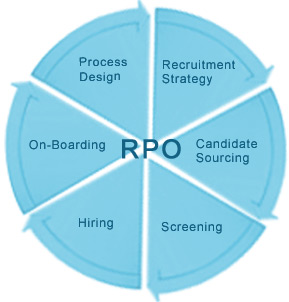
Doing a search for talent involves a timeline with some conflicting factors. It also involves a process, generally known as a recruitment process. What's desired is to hire the best talent available. That takes time in order to find them, evaluate their fit for the culture, determine whether their skills and abilities match the client's needs, and then find a way to induce them to consider the opportunity.

That's just the up-front work. There's still the factor of arranging the interviews and actually having them. And then there are the other phases.

Meanwhile, the hiring clock is ticking. Although the candidate seems to be passive, that may not be the case. There may be other inducements extended to them that the candidate is keeping private. Depending on where they are in the process of evaluating those other inducements, the one who is your prime goal may get snatched up by a competitor or simply by some other company. A great example of such a scenario was recently shared on LinkedIn as a recruiter informed a client that their desired candidate was no longer available - three weeks after the interview.

The economy is no longer a soft cushion where people have a huge luxury of time. There are obligations that require attention. There may be changes in conditions that require adjustments and change of employment situation. There are many factors in addition to someone else was able to pull their act together in a more timely manner and extend the offer.

Candidates don't want to appear desperate because that devalues them and the potential offer they can attract; the status gives the appearance that they'll accept anything, no matter how ridiculous. Although they appear to be a passive candidate, they may have privately made a decision that it's time to make a change. So it is wise to be prepared for that state of affairs. While it would be good to make the change early on (for example, their present employer isn't going to close shop in two weeks), they still have the time to do a reasonable search for the right fit. If the candidate is of the quality that is sought, the chances that they'll be in the market and available are slim. Recruiting and hiring process is a two-way street. Fit is a consideration for either side of the picture.

Discretion is the better part of valor when it comes to deciding to change jobs. There is a possibility that the situation can be improved, or not. But there's no need to be overt about the growing interest in making a change. If this is a first job, timing is also critical. Expenses of one's livelihood become factors when the process becomes protracted. But all of this discussion is from the candidate's perspective. Perhaps that's what we should be doing as we go through developing and executing our own process.

The other thing is that when the process takes too long it's a signal that the client is not as motivated as was initially indicated. Worse, there's the possibility that the delay indicates low regard for the candidate which in turn becomes a deterrent to making the client's situation the candidate's new employment home. It's important that the candidate feels valued and respected.

Communication is critical to creating a healthy recruiting and hiring process. It is vital to have the right job description worked out before the search is started. A determination of what skills are must have should be in place so that all are clear about what the person's role will be. If they have additional skills and knowledge to bring to bear, how can they be used to benefit the role? Perhaps the candidate is being under-utilized in the current search and deserves to be considered for something that is more of a challenge. But the candidate needs to become aware of that concern.

Sometimes recruiters (and clients) forget that candidates are humans. They all deserve respect and that respect includes regard for time, resources, timely responses, courtesy, and a valid awareness of the company culture. They also deserve to know about the company ceiling and whether there is access to some part of the roof garden, if that's what they eventually want to be involved with or occupy.

To encourage companies to keep the process goals uppermost in their efforts, The Talent Board, in collaboration with recruiting industry experts, developed the CandE Awards in 2010 and held its first recognition in 2011. Of it, founder Elaine Orler says, "Only companies that had a true positive candidate experience defined by the candidates, and proven by the candidates would be recognized. All other organizations would have access to their benchmark data to make decisions on how they can improve, . . ." She goes on to say, "[w]e recognized 25 companies that demonstrated a positive candidate experience, defined by the 11,000+ candidates that responded that year."

Where is the awards program today? Reports Orler, "As of last year the program had expanded to three major regions of the world, over 400 companies participated, and over 220,000 candidates shared their experiences, in seven languages. The data that now exists on what defines a positive, neutral, negative candidate experience is validated 10x over."

Incidentally, the ability to pull one's act together in a timely manner is also an indicator of the company culture, the company leadership, and whether the company is a desirable place to work. It's an indicator of how innovative and responsive the client is. It's also a factor in how innovative the recruiter is in developing ways to help their client remain focused on keeping the process moving forward. The recruiter provides a service to the client to keep the process moving so that the collateral and tangential losses are minimized while the brand continues to grow.

Resources:
Sponsored Links:

Friday, October 11, 2013

Nine Tips for Diversity Leaders

This morning, a discussion on LinkedIn finally grabbed my attention. An editor wanted to know (paraphrasing) what tips the group members have for future diversity leaders in terms of necessary skills and expertise. It was the type of question that a nurturing personality has difficulty letting get overlooked. So I responded.

Skills:
  • Ability to listen carefully, process the information, and respond with an appropriate response. Most would call all of that "good communication skills" but communication involves more than just talking at people or reciting anecdotes about 'this happened to me.'
  • Ability to operate as a professional without projecting an air of pride or smugness. Become a beacon and role model but first, and most importantly, be human.
  • Use your maturity. It's important to have the maturity to deal with human nature and various age demographics in order to learn from them as well as convey useful information to them.
  • Communication is critical. If your message isn't getting through, take some time to review what you're saying and how you're saying it. Then modify your strategy so that the vocabulary and voice are not only understandable but also heard. Also consider aligning yourself with someone who more closely identifies with your target demographic so that they are speaking the language. Then the message more easily reaches its destination and becomes effective.
Expertise:
  • Choose a specialty area and learn as much about it as possible. The learning should not be solely classroom- and textbook-centric. Those are clinical settings based on what others are telling you. In many instances, the best experience is to be out in the field interacting with the people and situations that constitute your specialty area. In order to gain that experience while still learning your specialty, it would be good to do volunteer work at a nonprofit that specializes in your calling or intern for them.
  • There are many ways to gain an appreciation of the needs and wants of your audience. Some people have walked and lived among their specialty constituency (sometimes not on a willing basis). That can be extremely dangerous if it's done with no safety tether (others outside of the situation who can help you get out of harm fast). However, that type of immersion provides real life awareness and the ability to develop meaningful strategies to address issues.
  • Having a real appreciation of the constituency needs leads to engendering trust from the members. That is extremely important to being effective as well as developing respect.
  • A leader needs to have the sophistication to appreciate when transparency is mandatory.
  • Recognize that privacy and confidentiality are imperative.
  • It's important to do proper screening, usually couched in casual conversation that makes the person comfortable enough to share their philosophies that wouldn't ordinarily be verbalized (or demonstrated) in an employment interview setting. That will make proper selection of the most effective personnel possible.
Someone recently asked whether it's possible for a White person to be a leader of a Black organization. The ancillary query related to whether a woman could be an effective leader of that same group. As that conversation evolved, we looked at the NAACP as an example. It was founded by mutually concerned individuals from all ethnicities and walks of life. Among the founders were abolitionists, Jews, Gentiles, Blacks, Whites, men and women. One of the most pivotal of the founders was Mary White Ovington. The first "president" of the organization (who served in that capacity for ten years) was a White man, Joel Spingarn.

A few words about being a leader, no matter what the cause or organization, is having foresight and vision. Those skills will allow the leader to see most of the pitfalls before they arise. That will then enable them to develop strategies to avert the difficulties, use them to the organization's advantage, or overcome them with as much ease as is reasonable. In order to garner the support to execute the plans and goals of the organization, a leader must have excellent communication skills or a trusted adviser and speaker who can communicate the rallying cry on their behalf.

Finally, it's extremely important that the leader be able to understand the psychology of their opposition. Doing so will empower them to gain the ear of those who resist. Sometimes resistance is nothing more than fear dressed as aggression or hate. The ability to allay those fears by showing the benefits of becoming aligned takes significant skill and ability while yielding results useful for more than the constituent group.

Sponsored Link:

HBR's 10 Must Reads on Communication (with featured article "The Necessary Art of Persuasion," by Jay A. Conger)

Monday, December 17, 2012

A Time for Reflection and Development

Things have been building to a point during these last several months. The basis for the various situations and conditions were a curiosity. They were also not only annoying and inconvenient, they were also vexing. It was disturbing to have Life seem to be closing down and therefore one's existence being shuffled to the Exit.

The situations could no longer endure and a remedy needed to be sought. However, it still felt as though a barrier between me and current situations was being erected. It's important to put these types of premonitions in their place and also to not allow them to overwhelm with their unsubstantiated suggestions. The basis of a situation needs to be identified and understood before the issues can be properly addressed. So I arranged to be taken to the hospital and have things diagnosed. I anticipated a long wait. In order to deal with that, I took with me three of five books I purchased in September that were to form some of the content I would be presenting on domestic violence as it affects the workplace.

Although I was seen immediately, there were many intervals where nothing happened and time needed to be filled. One of the books I brought with me is Blind-Sided: Homicide Where It Is Least Expected by Gregory K. Moffatt (Sep 30, 2000); I began reading it during my wait on December 13. The first chapter explores three different types of homicides, domestic, serial, and confrontational (meaning targeting a large, random group). It also analyses why these types of murderers are called a nice guy by friends and acquaintances as well as what pressures were impacting these types of people that ultimately led to their explosion of emotions.

While the reading was engaging and the theories being proposed were fascinating, I began to weary and Nurse was concerned with the fact that the wait would endure for quite a bit longer. She turned on a television for me. That was when the news about the shootings at Sandy Hook reached me.

In these ensuing times, there are fits, rantings, weeping, mourning. People reach out to others to comfort or be consoled. There are the outraged who demand better gun controls and compare the United States laws on gun control with other countries. They compare the two, essentially saying the other is better and we should adopt their policies. Caution here. One must examine the existing terrain before planting sugar cane lest it be planted in a swamp.

One of the issues that stands out in situations of murder to any degree is a very fundamental need for something very basic. It's so basic that we take it for granted and ignore caring for it in the proper way so that our global community can thrive. That need it communication. Not just talking. Not merely putting together a group of words that create sentences that build into paragraphs and ultimately to speech.

Additionally, communication has many dynamics. Not the least of the dynamics involved in good communication is listening to what is being said. Given the fact that different words have differing meanings to different people in different contexts, we have a responsibility to ask clarifying questions in order to insure that what we think we hear is the actual message and that the words being used are understood for what they intend to convey.

It is only when we have good communication that we have the ability to express ourselves and be heard. Those are the catalysts for action and progress. Those are the catalysts for change. We usually aspire to positive change an better conditions. There were social pressures impacting the Sandy Hill killer, pressures that he had no skill at verbalizing. So he resorted to exacting and relieving his frustrations on those around him. Ruling out insanity (which is the typical cop-out and label in situations like this), the ability to communicate his concerns may have gotten him associated with the person who could provide the tools and resources necessary to ameliorate the stresses and therefore prevent the rampage. We need to work on developing much better communication skills.

Not New

My friend, Patti Yaritz, shared an image on Facebook. It was an image of Martin Luther King, Jr. with an excerpt from his speech "Eulogy for the Martyred Children" delivered on September 18, 1963 in Birmingham, AL. It evoked a lot of thoughts, feelings, and recollections. I vocalized:

I remember the circumstances of this speech. It was during the time of the church bombings in the Deep South. I believe three little girls who were in Sunday School were the victims of a bomb that impacted their Baptist church. You're right, Patti. There isn't a lot of difference between the precious little lives that had faint opportunity to experience, much less violate, Life then and the ones that were violated last week.

And now all we have left is to hang our collective heads in misery, once we've spent some energy being angry and ranting at the world. But as we hang our heads in misery, we shall actively begin to construct new, better ways to encourage an age of reasonableness so that incidents such as these (and that are not a result of some type of formally declared warfare) will either be less likely to occur or will become a nonexistent alternative for anyone.

Let me use this window of opportunity to reassert my contentions from 2002. We in the employment industry need to develop (and be trained to identify) legal methods to determine who abusers and potential abusers are before we bring them into the workplace and thus give them a license to leak their propensities onto others who have nothing to do with the real underlying problem.

Abuse is a malignancy, a sickness, that is spreading its evil into many aspects of our lives. Communication is part of the remedy, to be sure. Respect is another. But abuse of good communication skills to the extent that they are not being used is one of the problems that needs to be solved. There are many other issues impacting us today. However, the demand for the reduction of abuse, increase of better communication skills are reaching a fevered pitch. We are past time to begin the remedies but we're not out of time.

Resources:
Sponsored Link: Blind-Sided: Homicide Where It Is Least Expected

Tuesday, May 29, 2012

Thoughts on Enterprise Social Media Protocols, Pt. 2

Star status is important to some and not to others. Knowledge that they've been part of the end product sometimes carries its own limelight. To cut the negative side of competitiveness, it's important to acknowledge the more significant contributions of certain members of the team. However, the leader also needs to recognize how the rest of the team contributed to reaching that plateau.

Secretiveness among members needs to be discouraged. If there's an offsite meeting or finding, the results need to be shared with those who could not be present. It's such bad form to have suspicion coloring what's done. It leads to mistrust and eventual exits that create delays in the project while the replacements are hired. And the project will then have to absorb at least some of the replacement costs of search, intake, training, and returning to the point where the team was before the loss of manpower.

Make certain systems work. If there's a malfunction, the basis for it needs to be discovered and disclosed so that it won't happen again and so that successors don't have to deal with it. The basis for the malfunction, once discovered, needs to be revealed so it can be avoided and personnel can feel as though their efforts are subject to being thwarted (i.e., a major waste of time).

If someone on the team is promised feedback, more information, asked to attend a meeting, they need to receive what they've committed to. Make it on time, or as close to on time as possible. They may be sitting on something that requires that bit of information; delay causes their part to either not be delivered or delivered late. Coming back to the team member for a meeting that's before the appointed time is the same as telling them their schedule has no value and that you feel they're simply sitting around with nothing to do and waiting for your precious presence. Don't come off as smug and self important.

Additionally, the team member may have quite a bit on their plate. Putting the meeting (whether in person, by phone or Skype, or some other mode) on their calendar and clearing out a point when they can give you their undivided attention allows them to keep their workflow moving and timely. A spontaneous change because one has jumped the gun or suddenly has an open slot in the day is quite simply selfish. Other priorities then get shifted to a different situation. Progress is thrown off to the point of having to be rescheduled to another day or may even be lost because there simply is no longer any time for the exercise. Keep appointments. If it can't be done and you realize it, reschedule for another time that is mutually convenient.

Now that we're in the 21st Century, people seem to forget some of the Web 1.0 netiquette we used to practice. There used to be these cute little abbreviations and initials that gave us clues, initials such as "afk" which stood for "away from keyboard" (a tactful way of saying I need to get something, put out the fire, go to the bathroom, etc.) and "brb" which stood for "be right back." Both of those let us know that the person on the other end was no longer available for a short duration.

Unfortunately, we've lost touch with those practices. Now people will walk away from the computer and have a meal, go visit with someone in another building, have a conversation with someone else in person for 30 - 60 minutes. Respect your team mates and their time. Let them know when you're stepping away. Let them know when the absence will be protracted. You're more apt to get their future cooperation when they're shown that they and their time are valued.

Sunday, May 27, 2012

Thoughts on Enterprise Social Media Protocols, Pt. 1


Enterprise Social Media relates to shared information from one department manager to the rest of their personnel as well as from one department to another (or several), and then from the CxO office to the rest of the enterprise. That means reaching out to all of the teams, whether in the 2-3 person business as well as the global enterprise with thousands of employees.

Because the reach is so vast, and the message can be distributed so quickly, great care needs to be taken that people who are hired appreciate and respect the sensitivity of information that is shared. Team members need to keep project details and findings within their team until they are told it is ready for distribution. Even then, their leader needs to define the breadth of the distribution.

Corporate culture with regard to feedback and results of work can be playful on occasion just to keep things fresh and not oppressive (or boring and tedious). However, the jocular moments need to be defined as such because a text message or email doesn't contain voice inflections (unless they're composed on a voice synthesizer) and not everyone from the same country, let alone the same region, understands some things that are humor. But I digress.

Team members need to respect one another in every way. Likewise they need to be imbued with the power to build the results of what they do by being able to offer a different perspective or even object to something that's been put on the table. But they also need to take responsibility for those positions by offering the basis for the position. When points of differences are defined, it's easier to understand where the idea won't work in a particular situation but may be one of the potential solutions in another setting. And understanding the reasoning behind the support or rejection helps to shed light on the project side of it and not allow it to be construed as a matter of personality.

There's no room for gossip (unfounded information about others or things); there's no room for needless distractions that tend to cause panic or discomfort. Constructive criticism should be encouraged for the sake of growth and learning. Learning should be encouraged. Good communication skills through open, tactful speech should be encouraged. Tact is paramount followed by exchanges between parties for the sake of transmission of information as well as building alliances. And exchanges of information mean confirming that the correct message was heard by the correct party(ies). Confusion about terms and terminology should be cleared up quickly so everyone is on the same page.

Nor should there be any space in any way for threats of punishment, suggestions of coercion, destruction of input to work or research or work, withholding of privileges for lack of consent. Abusive and retaliatory consequences simply do not belong in your corporate culture much less on any of your teams. Isolation, being ostracized, personality differences, failure to recognize the advantages of diversity of culture, ethnicity, abilities, and even age make being in your enterprise not a healthy place to be. Get rid of all of it and don't let it slide under the door.

Star status is important to some and not to others. Knowledge that they've been part of the end product sometimes carries its own limelight. To cut the negative side of competitiveness, it's important to acknowledge the more significant contributions of certain members of the team. However, the leader also needs to recognize how the rest of the team contributed to reaching that plateau.

Thursday, September 24, 2009

It's the Little Things You Say

Some employers wonder why they just achieve full diversity in their workplace and then it suddenly collapses when an exodus of five to ten people occurs. The pay is good. The benefits are excellent. The working hours aren't excessive. Work-life balance issues are addressed. There's everything going for the environment. So why are these five to ten people leaving after a year or two? The scenario is repeated year after year, department after department.

Maybe that's the problem. The things that are being held constant but not examined. Undoubtedly, the interviewers are people who have been in the organization for a good amount of time. They've become acculturated. They speak and reflect the culture. That's one of the reasons they were selected to be interviewers. They represent the corporate culture in addition to knowing all of the details about the position and the best fit for it. As interviewers, they don't grill the candidates; they have conversations. They tell anecdotes that are actually open invitations to share information and personality. They relax and begin to spontaneously react to things said by the candidate and then reveal a little more of who they are and why they've been with the company for as long as they have.

There were faux pas during the interviews that the candidate chose not to address or acknowledge. But as time passed, the new employee realized these were not aberrant. These instances are part of the corporate culture and they keep getting repeated in various ways.

Coupled with watching the practices is the listening. The listening started from the moment the phone call reached them for the phone interview and the invitation to come in for a personal interview. The listening was happening as they sat in the reception area and as they made their way through the halls from one office to the next. The listening was happening as they walked into the front doors into the elevator from the commute to the office.

It was the little comments that were made in response to something that was willingly volunteered in order to show how motivated the candidate was. It was an observation that over-reached the situation but simultaneously came crashing down on a particular class of individuals. It was an observation that was basically pandering to some part of the candidate's identity and the observation was completely wrong. They were asked where they expect to see themselves in five years. The honest response was met with a muttered, "Yeah, right." During their tenure with the company, some executive asked them to reserve some time because they wanted to meet with the employee. The employee had been doing the right type of networking and politicking to move into that department and commented to their supervisor that the meeting would hold a lot of opportunity for them. The supervisor's comment was something on the order of, "I doubt it."

One of the things these corporate emigrants realize is that there is no place for them in the higher rungs of the company. They've been there long enough to have watched the various types of personnel who are pushed along and who has been diverted or discouraged from following a particular path. The pattern repeats itself without benefit of gossip nor sniping remarks.

Perhaps there was good follow-up and the candidate was contacted by phone or letter or email. The message was essentially that although the candidate's qualifications and background are exceptional, they simply were not the right fit for the position. Good luck in [your] future endeavors. Blah, blah, blah, blah, blah. Or perhaps there was no follow-up. A person who looks just like everyone else in the company was hired and life just went on. If either of these situations occurred, the candidate who was passed over had little to say aloud. In fact, they may have even forgotten they interviewed at your company. Why? Because of how under-whelmed they were. They were relieved to be out of the way of the sniper shots.

In the alternative, they were hired for some reason. Maybe it was because they are of the ethnicity or gender that was required at that time. But they've reached that exodus threshold and just tendered their resignation. That's when a disappointed at the resignation notice is made and thoughts about losing a worker of that quality are mulled. Where to find more of that type of worker to do exactly the same thing but more of it. After all, that's why they were hired. More importantly, how do you keep them?

"Sam[antha], you're such a great [insert job title]. You're conscientious and hard working. You get things done and don't need a lot of supervision. You're not like the others of your kind. You're an exception. We'd like to keep your kind with us in the family. Is there anything we could do to convince you to stay, to keep doing your exceptional work for us?"

It's about this time the key to the door has been turned and locked. Sam[antha] doesn't need to say anything but will probably respond with, "I don't think so. But thanks."

Friday, October 03, 2008

A Clearly Written, Accurate Report

Communications are extremely important among us. When they're verbal, our listening skills are tested to the nth degree. Our recall of what was said, the meaning of the terms used, and the order of any instructions given all have significance.

If the communication is written, it has even more enduring life and reference. Using the wrong term to identify someone or something could lead to a lot of misunderstanding, make follow-up actions go the wrong way, and even damage reputations for a very long time.

For those of you who are astrology aficianados, you already know that Mercury is in retrograde. Just to fill you in (in case you're not an astrology nut), when Mercury is in retrograde, communications are extremely poor. Contracts entered into at this time will be done improperly and need to be redone. Telephone tag is the name of the game. Electronic devices will malfunction. And communication life will be in chaos until Mercury goes direct -- about six weeks later.

With this in mind, imagine how interesting it was for me to find an official report written by a government employee. There seemed to be a sincere effort to bring truth and justice to those involved, but when the report was read with an active reader's mind, some major questions kept coming up and the credibility of the one giving the report was tolled. Here's an example:

"The vict and the susp were engaged in a verbal dispute."

I talked with someone at the scene. What was reported was that the victim was engaged in a conversation with a visitor and telling anecdotes about things that had happened at the residence over time. One anecdote involved the suspect. The suspect became annoyed at the revelation of the grossness of their behavior and made a threat. The victim challenged the suspect to follow through on the threat.

"The vict then began to strike the vict approx 10 times with her fists to victs face."

This sentence makes any reader want to know why the "victim" began striking herself and especially why so many times. Well, there are masochists and people who will do whatever is necessary in order to obtain pain killer medication. Perhaps that was the reason the victim was striking herself in the face so many times. According to the person who witnessed the incident, it was the suspect who began shouting threats; she was not being threatened. It was the suspect who began the verbal altercation. Instead of walking away from the challenge to live up to her boasts, the suspect decided to use brute force hit the victim.

"The vict fell down and the susp continued to punch and kick the vict."

At least there's helpfulness at this site. Wasn't it nice that even though the victim finally knocked herself down from pummeling herself, the suspect was willing to continue the beating, as well as kicking her. That is true generosity.

Well, it looks like things turned from being self flagellation to a multiple personality free-for-all. If that's the case, don't go to the place where this incident occurred. You won't know which personality you're dealing with nor which will be present. Not only that, if it's the masochistic one (or the multiple one), they're liable to pull you into the frey.

Unfortunately, this report was not written with care and little attention to accuracy. As you may gather, neither of the parties were in a position to proofread what was written and ask for corrections to the narrative. If the victim is looking for redress and credibility, her ability to get either are squelched. It isn't terribly clear who was assaulting whom. Except for the labels, it sounds as though only one person was attacked and a bystander was the one who perpetuated the it.

Mercury is in retrograde for six weeks. It went into this phase on September 17. Until it goes direct, double check your written reports, be careful of using run-on sentences, and strive to be as clear and accurate as is possible. Remember, your report will govern how others respond.

Monday, May 05, 2008

Case Study: The Nebulous Barista

One of the greatest challenges any person can experience is what to do when presented with a potential conflict of interest situation. It first has to be identified as a potential conflict of interest. If it can go either way, the consultant (or any other business person) must have a thorough and honest assessment of their own self in order to determine whether they are capable of putting aside their personal feelings in order to deliver a fair and balanced assessment of the situation and then make reliable recommendations.

I've never faced this sort of challenge in any of my business or consulting career until in the last six months or so. I was in a relationship with "Martin" and it had pretty much become public. Knowing my business identity as a management and career consultant, all three of his shift supervisors, during conversations on different days about various and sundry topics, broached the subject of Martin and what a great worker he is. The only perplexing issue for all three of them is what to do about him. He's max'd out on what he's qualified to do for the company yet he has talents that are not being tapped. Everyone is losing. They (all three) wanted to know what they can do to help Martin.

In the first two conversations, I promised I would think about the situation and get back to them. With the third, I began to question myself on the conflict of interest matter. "Can I put aside my personal feelings in order to deliver a reliable, independent recommendation about this?" I asked myself. It was a legitimate concern and one on which my reputation as a person capable of doing an accurate assessment and analysis rode.

One of my strong suits is taking a clinical look at a situation in order to see the various issues impacting it. A colleague recently commented on how careful and detailed my analyses of situations are and how well they make plain the issues that are buried in the tangle of each situation. Even when it's something about my own personality, I'm very strict with my assessment, analysis, and corrective measures. I finally responded to the third supervisor that I could do the assessment (that is, I could maintain an independent perspective of the subject) but it would need to be on a consultative basis, not as one-on-one training. She was satisfied with that response but we did not explore any other details.

Background

Martin started with the company in the lowest entry position possible. He is smart. He knows the way to keep a job is to do one's work well, thoroughly and in a timely fashion, without being told to do so two or three times.

He is a willing worker. No matter what the task, he is available to carry out the steps to bring it to fruition. He does not grouse or grumble. But he is bored. Thus, when I met him two years ago, nearly anything could distract him -- mostly the women. He began to find my table on a frequent basis. He began providing little extra services. Eventually, he was given a timer so that he could remember when it was time to recommence his cycle of duties. The timer worked.

All three of his shift supervisors agreed on one aspect of Martin. He's reliable. "I know that if I assign something to Martin, I don't have to think about it again. I can rely on him to get it done and done the right way." It was as though the three had read these words from a script because each one said exactly the same thing about him.

But the company had determined that in fairness to all employees, it was no longer going to have a custodial position. Instead, everyone would pitch in on maintenance; everyone would have their day at the bar. Therefore, Martin's world broadened because he needed to learn names and preparation of drinks. He became more engaged in his work, happier and more productive. His ceiling was raised.

Previous Work Experience

About a year ago, Martin shared with me information about his education and work he did in his native country. He talked about some of his personal responsibilities and his interests; he shared several of his interests with me. Unfortunately, what he spoke of as his previous occupation and education did not match the capabilities he exhibited. I have reservations about his representations in this regard. It seems to me he was attempting to impress me in order to gain more favorable attention and reception.

His lack of facility in English was plainly why he had not followed his previous alleged profession here in the United States. If he was telling the truth, he is drastically under employed and doing himself a mortal disservice by staying in his present position without seeking some type of promotion. However, this is by personal choice and necessity. During private conversations (before the meetings with the supervisors), I suggested to him that he consider taking one or two evening classes, even an ESL class. He declined the suggestions by saying he did not have enough time to attend the classes.

Martin enjoys reading. He is a wealth of information that he yearns to share with others but is constrained from doing so because of his position and his language deficiency. He would do well in training others. In fact, he is usually the one who trains the new employees about the various housekeeping duties of the store. He is conscientious and thorough. Unfortunately, he gets a little confused about co-worker congeniality compared with romantic overtures and requires constant reminders that "it's called training."

Another thing that didn't match his purported past with his current environment was the ability to deal with people. True enough, he serves people with courtesy. And in accordance with the theme of the company, he makes you feel as though you're at home.

However, Martin's previous occupation involved explaining concepts to others, making plain those concepts that are difficult to grasp, and getting people to talk to one another. He would have been responsible for negotiating deals and bargaining with others. He would have been deeply immersed in long and complicated conversations about complex subjects. These conversations would have droned on until there was resolution, the parties saw eye to eye, and all was plain.

Martin is good at talking to people but not in confrontational situations and not when negotiations are required. When hostility rears its ugly head, Martin backs down and looks for an ally to come to his defense. In the past, Martin has shared stories with me about the hostile customer who did not receive their drink as quickly as they desired or the drink did not meet with their approval. Although we attempted to rehearse some of the scenarios, he declined on the basis that rehearsal was unnecessary. Likewise, we attempted to come up with negotiated resolutions. These failed because he was seeking someone to step on his behalf rather than seeking a way to amicably resolve the situation on his own.

This reticence to discuss and resolve carries over into other situations. In the long run, it is ultimately discovered that the reason for the conflict (lack of seeing eye to eye) is because of a misinterpretation from one language to the other. Clarifying questions and answers would have resolved the tension.

Assessment and Recommendations

Even though Martin's representations about his background and work experience do not match his current behavior, he is a dedicated, diligent, and reliable worker. He will continue in his present position (or some form of it) for as long as he desires to work for the company.

If Martin wants to advance in the company, there are requirements for reaching each new position in order to qualify for it. It is mandatory that he fulfill those prerequisites and stop avoiding them. He constrains his own opportunities with his reticence to face new and greater challenges. He also retards his growth with his refusal to accept responsibility for his acts.

Martin needs to realize that flirting is not a synonym for customer cordiality. He would do well to continue to offer a pleasant smile and attentive service. But outright flirting with the female customers is not necessary.

Although AB 1855 only requires training supervisorial staff on the issues of sexual harassment, it would be well for all personnel to receive some training so that they have some concept of where the line is and when they may be crossing it or inviting someone to do so. Again, a person with the previous work experience that Martin represents he has would appreciate the differences and be capable of accurately identifying the behavior, no matter where the source that gives rise to it.

He would do well to learn more about the names and attributes of products, correct spellings, prices, and proper display. He should be trained on all aspects of front counter service and become involved in delivering service in that area so that he becomes a completely well-rounded employee.

It would be wise to train Martin on how to handle hostility in the workplace whether it occurs between employees, employees and customers, between customers. It would also be helpful to train him on how to handle the scene when it appears there will be an attempted robbery and how to recognize a developing dangerous condition.

Martin's greatest shortcoming is communication skills. He needs training in how to have a conversation about misunderstandings rather than blame others for mistakes or allow problems to fester because of lack of communication. Still, communication skills is a broad term and only scratches at the surface of the root issue. Martin's skill in spoken English is poor and retards his progress in everything he endeavors to do. He should be supported in taking an English as a Second Language course so that he may master his vocabulary recall and fluidity of speech.

Tuesday, August 21, 2007

Challenged to Grow

Disability accommodation work can be isolated to one type of disability or span a range of needs. One area of accommodation in particular maps as an almost identical pattern in several categories of impairments yet it is successfully handled with nearly the same techniques. This disability can also be one of the most draining (in all ways) so that the burn-out factor occurs in a short time. The particular issue we examine today is the niche of learning disability.

A learning disability can be mild and not really surface until it becomes a barrier to some type of performance never attempted before. Minor adaptations can be worked out in order to compensate for the small issues. However, there are other learning disabilities that are more complex and profound. They interfere with interpretation of information; they can also interfere with communicating information; and they become impediments to accomplishing tasks and goals.

Other conditions that look very much like a learning disability are those where the person has issues with substance abuse, abusive personality, some psychotic personality disorders (in severe cases), and those suffering from one degree or another of ADD or ADHD. People with poor education or no education also easily fit into this classification, as well as those with little to no training and therefore do not know how to be independent and autonomous.

One of the signs of this type of learning disabiilty, that can be overlooked in a discussion of the signs and symptoms is the unfortunate habit of saying things that are quite obtuse and inappropriate. The person's words can be insulting or demeaning, a bit like spitting in one's face. In the alternative, these people will develop a completely incorrect interpretation of the information they heard or seen and swear that they are correct. Sufferers will even make excuses for what they have said or heard in order to justify its impropriety; they will argue for the correctness of their interpretation. Many times their passionate self defense will convince a few that they somehow did not understand and that they one with the impairment is quite correct in their interpretation. Some bullies demonstrate these propensities.

How to Handle

In its mild form, a learning disability is not easily detected. Being easily distracted can sometimes stem from fatigue, stress, or mere work/life balance issues. In this case, merely taking a break is the solution. All of us are affected by this and it is not indicia of some type of pathology. In fact, sometimes all it takes is turning away from the foot traffic that passes by a desk. At other times, the remedy can be as simple as sitting in an area with a large window in order to collect as much sunlight as possible. In the alternative, turning away from the window in order to avoid being distracted by the many scenes that fade in and out through the window.

Other ways of dealing with the condition may be to work for a particular time period and then take a brief break. Again, this is an excellent technique for very mild forms of learning differences. Many of us thrive on learning in a type of total immersion in our subject but doing it in intervals of 15 to 20 minutes or so.

ADD can compound itself very quickly as we increase the levels of new ramifications of the impairment. In fact, it is not quickly identifiable when you're dealing with a person with learning differences. But it's when a series of situations, taken together, start showing a problem that the issue becomes larger, more severe. Communication begins to be threatened. We need to be very careful about what we're saying and use every means possible to make certain we are being interpreted correctly.

This may mean we give instructions in increments. Or we give instructions (or information) and then have the person restate what we told them in order to insure that the correct message got through and was heard. Repeating the message confirms there was no straying in regard to interpretation of the information. If there was splintering of the information, this is the time to repeat and listen. If there is a misinterpretation, immediately stop their speaking and correct what it is that's incorrect. Have the statement repeated but in the client's terms. Continue doing this until their interpretation of the message is correct.

Coachable Moments

If there are terms the person with ADD is misusing, this is also the time to correct their definition. Make certain they understand that they were misusing the term, why the interpretation is incorrect, and what the correct interpretation is. This is a training moment. Use it. Use it in a non-threatening manner. This is not a time to be argumentative, although your "candidate" will object and say that you are. Just keep letting them know that they have not reached the same definition of terms; you're there to help. It's at this time that the conversation can become trying, even exhausting. Old habits die hard. It's times such as these that being professional and patient are the keys to keeping your candidate and winning this particular battle with the impairment.

These times can be difficult and draining. They will make you wonder why you're going through it. However, these are times of growth for both the accommodation provider as well as the client.

The client benefits because they gain new skills for coping as well as an appreciation of why the skills they acquire are valid. But the accommodation provider, the one who was just about to pull their hair out, also gains.

Getting through working with the client grows the ability to have patience. As you listen to the client, you learn more about different ways of communicating. You gain strength in listening to what others have to say and how they say it. You gain an ability to listen to various forms of logic and better understand them. You learn how to talk to people from all walks of life without judging them. If you are the type of person who has a laissez faire personality and just let things pass as not worth the effort, accommodation work with those who have moderate to profound issues will develop your ability to "push back" or cut the exchangement at the appropriate time.

Just working through these types of communications will enable you to grow a thick skin and will not back down as easily when you understand what's happening. It will help you see through bluster so that you can deal with the hidden feelings of inadequacy. You will also see past the shamed excuses for bullying that attempt to guilt you into accepting that type of communication, making you feel you must have misunderstood. You develop keener critical thinking skills.

Finally, you learn when correcting and clarifying are futile and end up being counter-productive. You benefit because you are challenged to grow in your being able to deal with all people of all walks of life.


, , , , ,